Designing Field Terminals for the Worst Network Day
Field hardware is judged on its worst day, not its best. Reliability out there is a design choice, made long before a device ships.
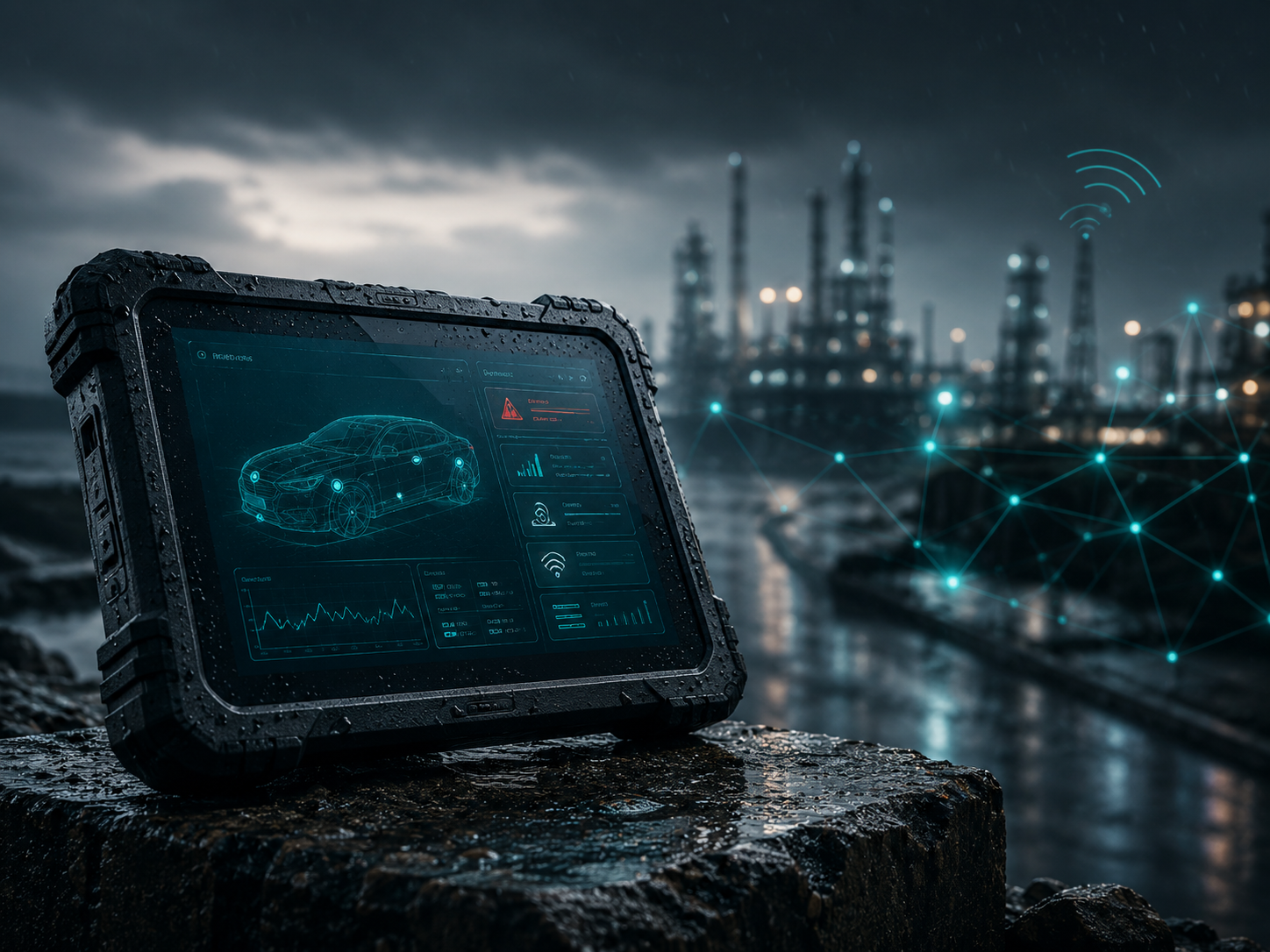
Field hardware is judged on its worst day, not its best. Reliability out there is a design choice, made long before a device ships.
Software built in an office assumes a good network, stable power, and a user who can restart things. The field assumes none of that. A terminal in a vehicle or a depot meets dead zones, dropped connections, and no one nearby to intervene — and it still has to be right.
The most reliable field systems treat connectivity as an occasional luxury, not a constant. That inverts how they are built: the device captures and validates data locally, then syncs when it can, rather than assuming the network is there when it acts.
If the system only works when the network is good, it does not work in the field. It just hasn't failed yet.
Reliability comes from anticipating the ordinary, not the exotic. In practice that means designing explicitly for a short list of guaranteed events:
One rugged device is a demo; a thousand of them is an operation. Provisioning, monitoring, and updates have to be designed in from the start, so a fleet stays observable and fixable without sending someone to every location. Hardware that cannot be maintained remotely does not scale — it just accumulates field visits.
The goal is unremarkable, which is the point: terminals that keep working through the bad day, sync cleanly when the network returns, and never ask the person in the field to debug them.
Next
Start with your scope — we'll define a clean technical path forward.
Contact Us