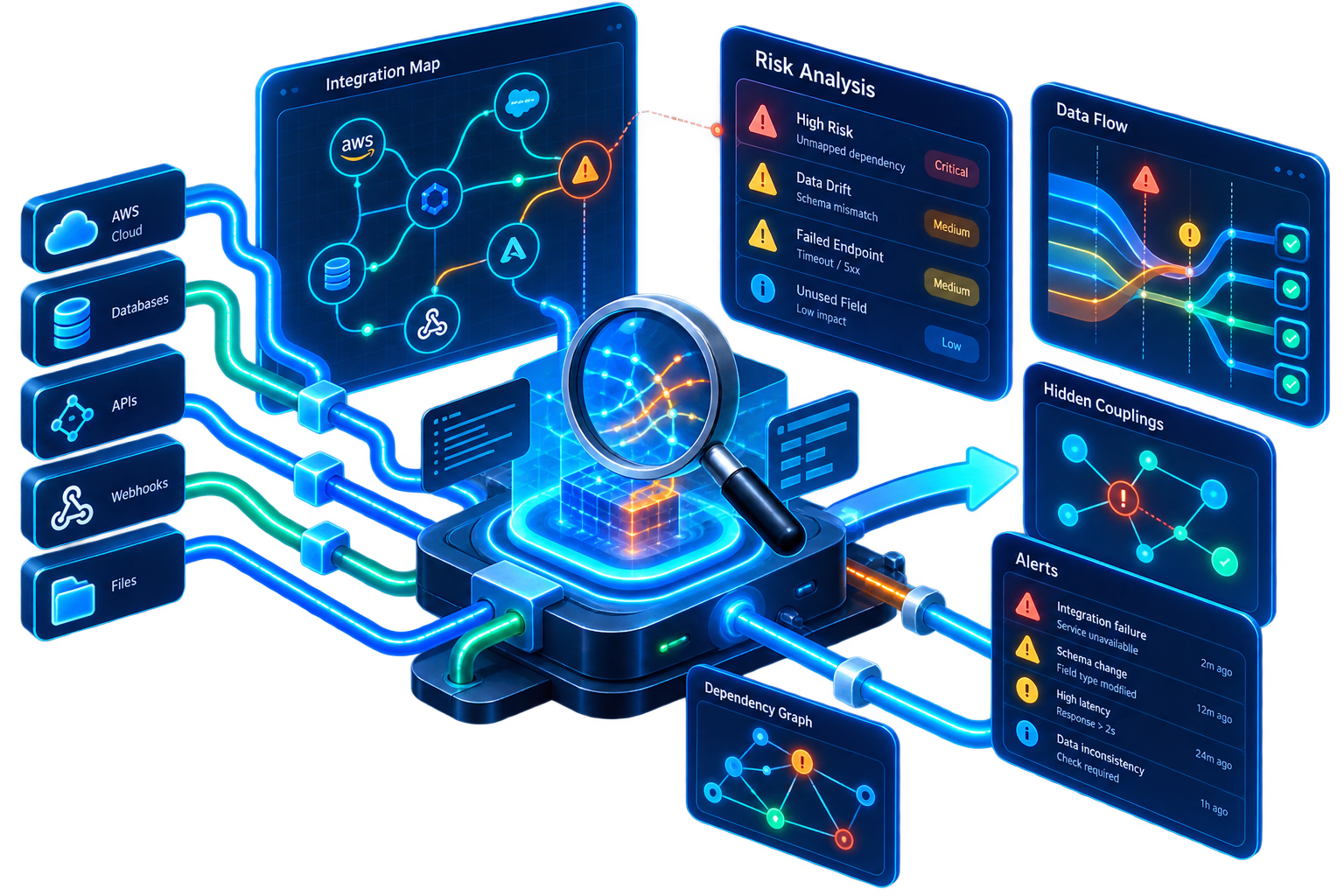
Integration mapping and risk analysis
We map existing integrations, dependencies, and data flows to identify hidden coupling and failure points.
Services · Integration
Connect services with clear contracts, logging, and fail-safe behavior. Integrations are built to survive change, not break on updates.
Start an integration reviewIntegrations quietly accumulate risk. Every undocumented endpoint, silent retry, and implicit dependency is a future outage waiting for the wrong moment. We make those contracts explicit — so teams share a single, verifiable understanding of how systems talk to each other.
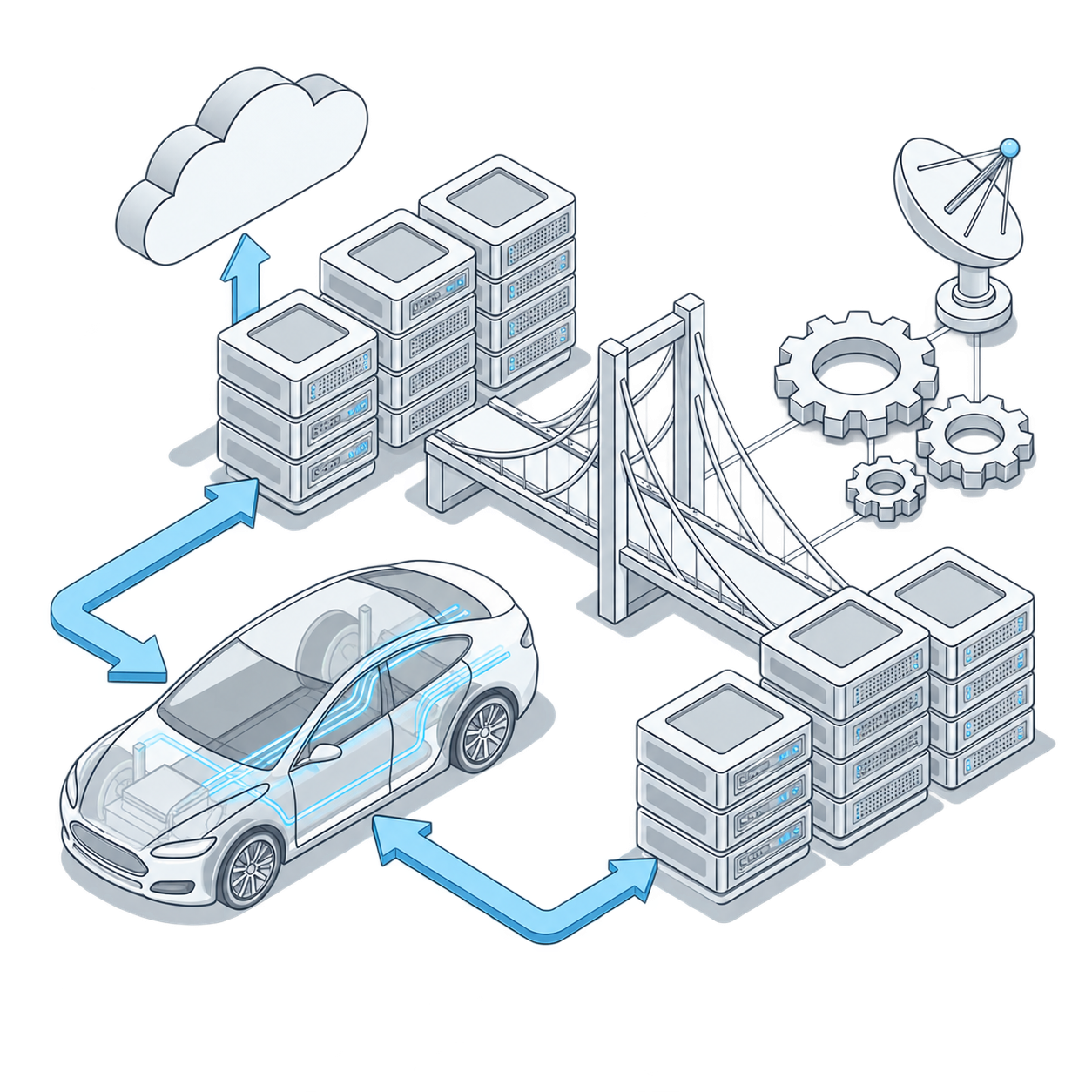
Contracts
Clear interfaces eliminate ambiguity about what each system expects and provides. Teams understand the contract before integration begins.
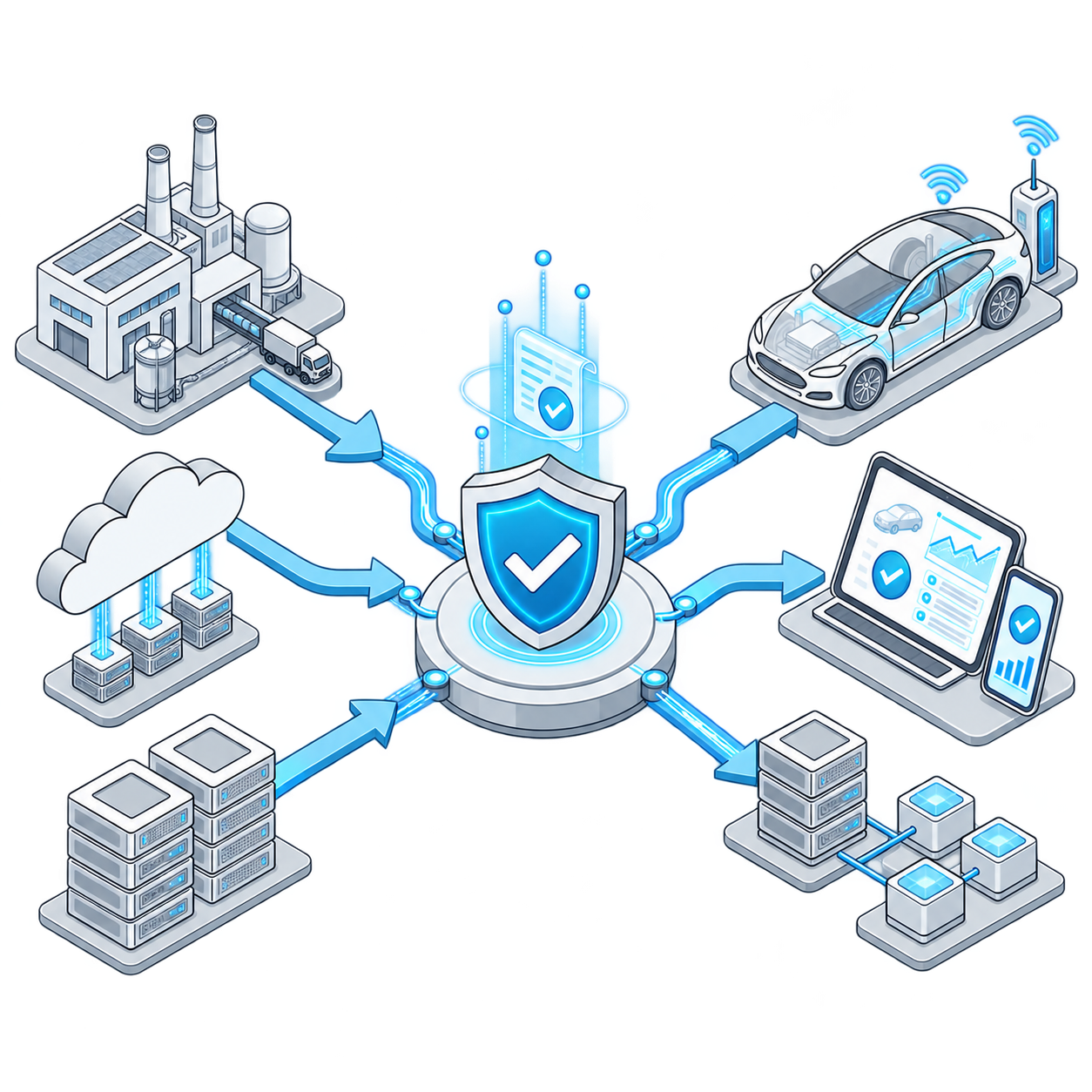
Validation
Contracts are tested against real traffic and edge cases, not just happy paths — so integrations behave predictably before they reach production. We validate producers and consumers together, catching mismatches while they are still cheap to fix.

Visibility
Structured logging and clear failure signals make problems visible early, so teams can trace behavior across services instead of guessing. When something breaks, the system tells you where and why — not just that it failed.
Approach
We stabilize systems while they remain in use. Our approach is incremental and risk-aware, improving observability first, then introducing structural changes that reduce failure modes over time.
We map existing integrations, dependencies, and data flows to identify hidden coupling and failure points.
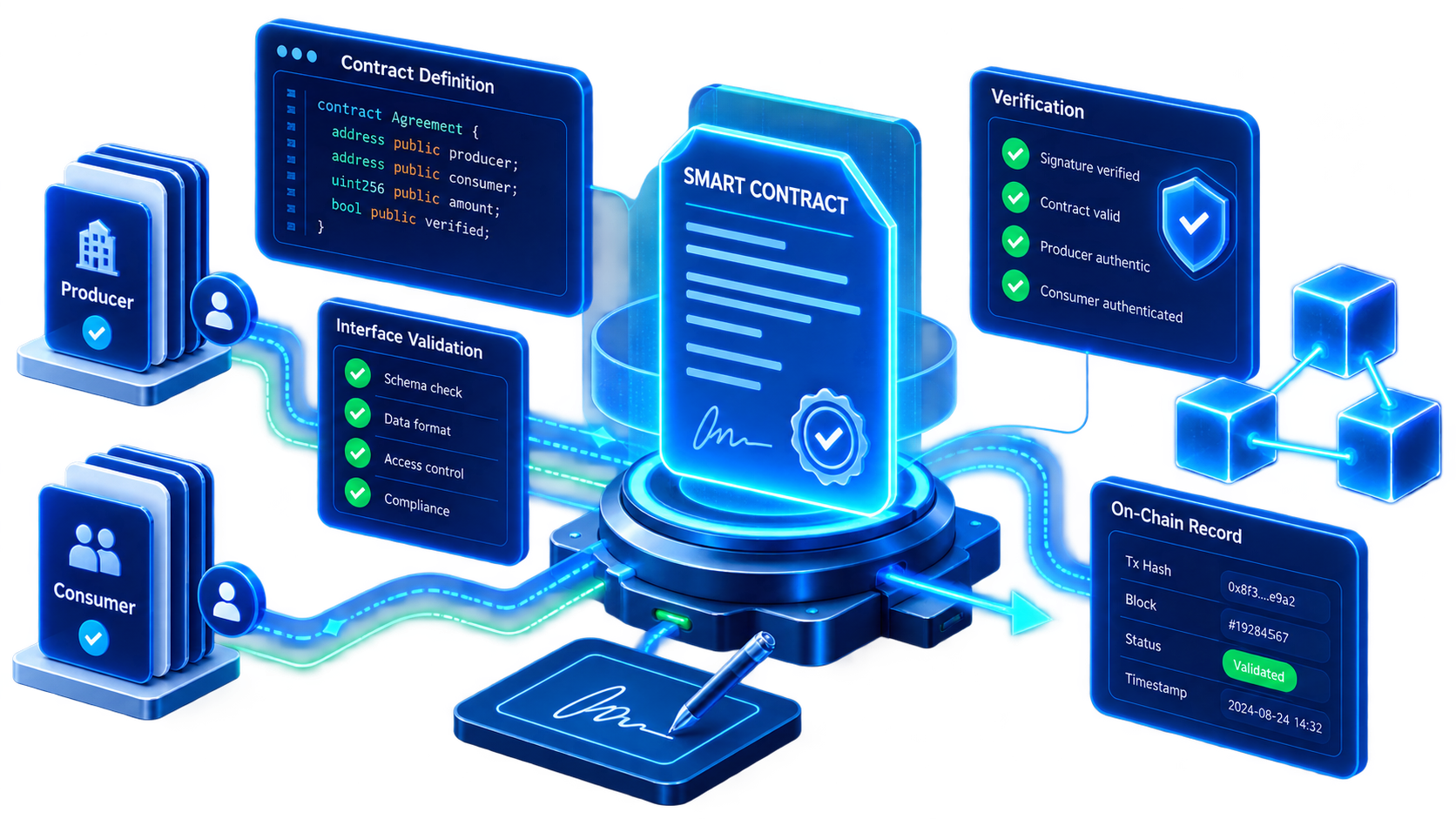
We define clear interface contracts and validate them against real producers and consumers.
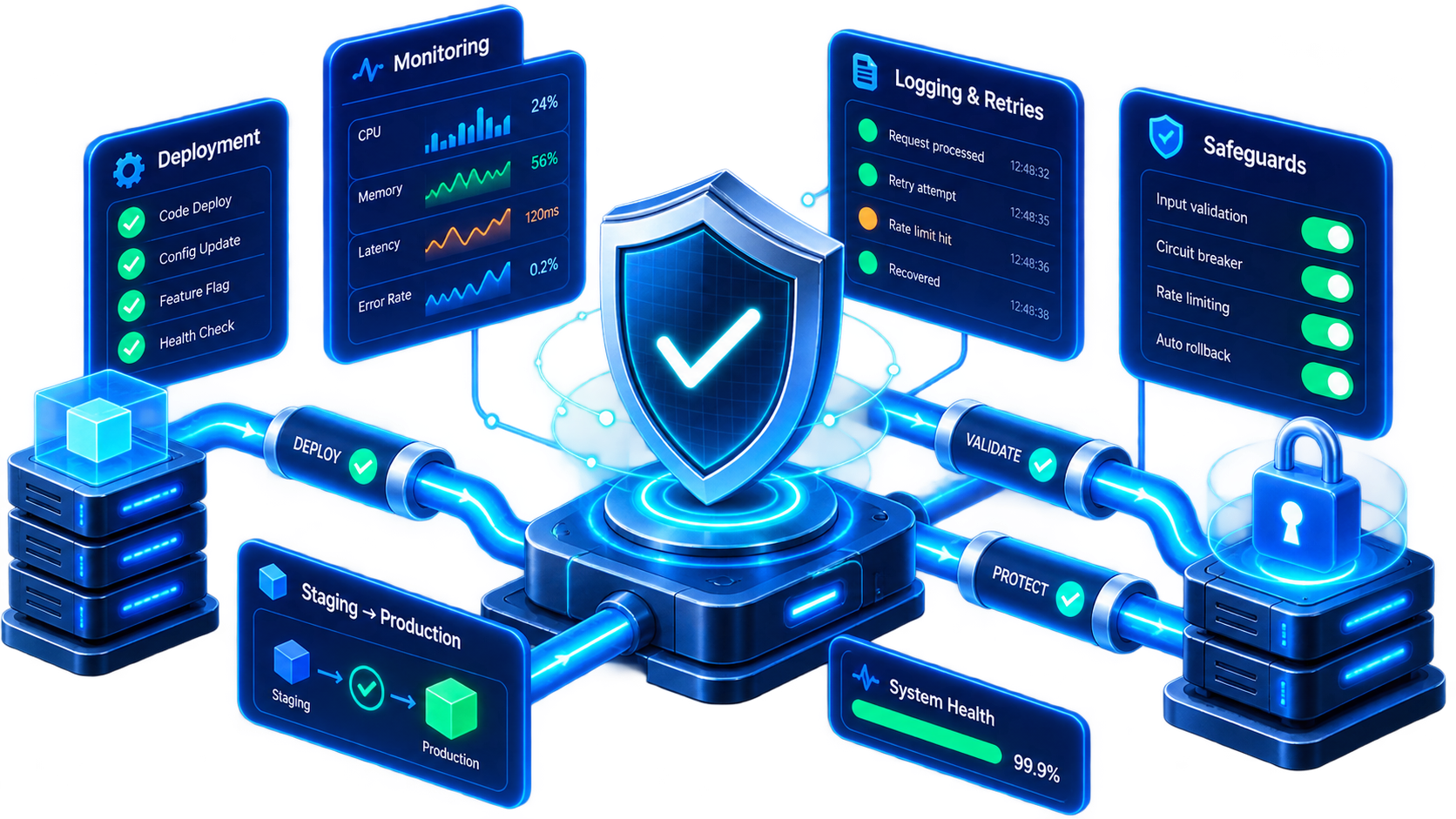
We implement changes gradually, adding logging, retries, and safeguards to ensure predictable behavior under load.
Related services
Next
Start with your scope — we'll define a clean technical path forward.
Contact Us